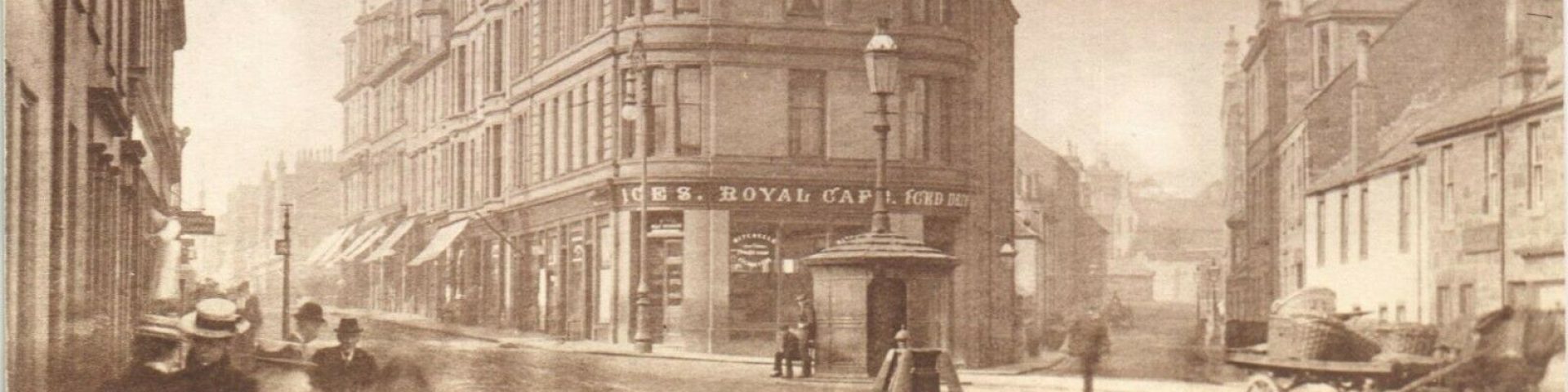
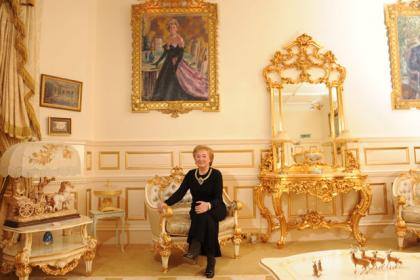
Often spotted on Paisley or Glasgow high streets, Vera Weisfeld was the woman behind one of Scotland’s most successful retail stories — What Everyone Wants.
Vera, who lived at Torr Hall in Bridge of Weir, worked in retail for much of her life and sadly passed away in December 2025. Today, we look back at a 2014 interview that captured her remarkable journey, her values, and her enduring connection to the people of Paisley and Glasgow.
“People will stop me and say, ‘Oh, Mrs Weisfeld, I worked in your such-and-such store years ago,’” she said at the time. “They’ll shake my hand and ask me why we gave up the business.”
Vera and her husband Gerald were the entrepreneurs behind What Everyone Wants (WEW), a hugely popular fashion chain which, at its peak, had around 40 stores, employed 2,000 people, and generated annual revenues of more than £100 million. The business was sold for £50 million 24 years ago.
Following the sale, the Weisfelds went on to establish the Weisfeld Foundation, which channelled substantial sums into local communities and charitable causes across Scotland.
A Life Recognised
In 2014, at an event at the Glasgow Hilton, Vera was presented with a special award from Retail Trust. Its chief executive, Richard Boland, described her “dedicated life, both in retail success and charitable sponsorship,” as “a fine role model for all of us.”
At the Weisfeld home — a granite baronial mansion in Bridge of Weir — that award sat among many others, including a Glasgow Chamber of Commerce lifetime achievement award.
Asked what these honours meant to her, Vera replied:
“I’ll tell you what they mean to me. When we started the business, we only had one unit — 1,000 square feet on the wrong side of Argyle Street.
“I couldn’t get anyone to come and work for us. They weren’t going to leave the big multiples, the well-known retailers, to come and work for me.”
Selling a Dream
WEW opened seven days a week, something unusual at the time. Many early staff members were students.
“I sold these kids a dream,” Vera said. “I told them if they stayed with us, they’d one day be earning lots of money — and that it would be one of the best companies to work for.”
Promotion from within became a cornerstone of the business. Vera trained her staff in everything she knew about retail. By the early 1980s, some of her protégés were earning around £100,000 a year.
By the time WEW was sold, several had risen to the very top — managing director, buying director, financial director. Collectively, they were known as ‘The Execs’.
“A lot of them are now millionaires in their own right,” she said. “Elaine Gray sold out for £30 million when she went to Mk One. I trained Ian Grabiner, who later ran Arcadia.
“So these awards are important,” Vera added, “especially for anyone coming into retail, to realise that you really can progress.”
“It Was a Fun Company”
Despite the success, Vera admitted she missed the day-to-day buzz of retail.
“All the time. It felt like we’d sold our baby. I miss the Paisley and Glasgow people. It was a fun company.”
She once had a DVD made in the Paisley Piazza store capturing daily life inside WEW.
“All you see is dancing and singing — you wouldn’t think much work was getting done,” she laughed.
She led by example.
“I’d never ask staff to do anything I wouldn’t do myself. If a van was unloading outside Argyle Street, I’d be in there lifting clothes. I did that right up until the sale. We were ahead of our time in many ways.”
She recalled customers hiding WEW bags inside Marks & Spencer bags — a sign of how attitudes to discount fashion have since changed.
“Now people brag about bargains,” she said. “We used to say we brought fashion to Glasgow at prices people could afford.”
She even sang a line from the famous adverts:
‘Who leads the fashion scene in Scotland? What Every Woman Wants.’
The song, she said, was sung at every store opening, with customers joining in before the ribbon was cut.
Ahead of the Curve
Long before social media, new stock arrivals spread by word of mouth.
“Stores were mobbed at lunchtime when fresh stock came in. It was like jungle drums,” Vera recalled.
BMX bikes were once sold straight from shipping containers, demand was so intense.
Despite their wealth after the sale, the Weisfelds had worked relentlessly — taking just two days off a year: Christmas Day and New Year’s Day.
Asked if her beautiful home was the reward for all that effort, Vera replied:
“Yes — but the Execs are my reward too. I promised them that if we grew, they would grow as well.”
Giving Back
The Weisfeld Foundation eventually wound up its work, but Vera spoke with pride about the causes it supported. Shortly before the interview, she had sent £19,000 to Marie Curie Nurses and pledged the same amount for the following three years.
“I’m still giving and writing cheques, and I’ll do that until there’s nothing left,” she said.
“I was brought up in a single end in Coatbridge. I was brought up to share.”
That spirit dated back to WEW’s earliest days, when staff were given purple WEW bags containing whisky, sherry and shortbread to give to pensioners in their streets.
“As we did better, we helped churches, orphanages, Christmas parties — it just kept going.”
By 1989, the Weisfelds were donating half their profits to charity.
A year later, after surviving an emergency landing on a DC10 flight over Rio de Janeiro when an engine caught fire, they decided to sell the business entirely and focus on helping others.
Never Forgetting Her Roots
Vera lived a remarkable life, meeting world figures and hosting notable guests. On her wall hung a photograph of her and Gerald with Mother Teresa.
Yet she never forgot her roots — or her days at What Everyone Wants.
And those moments, when former employees stopped her in the street for a chat, clearly still meant the most of all.
 Paisley Photographs