
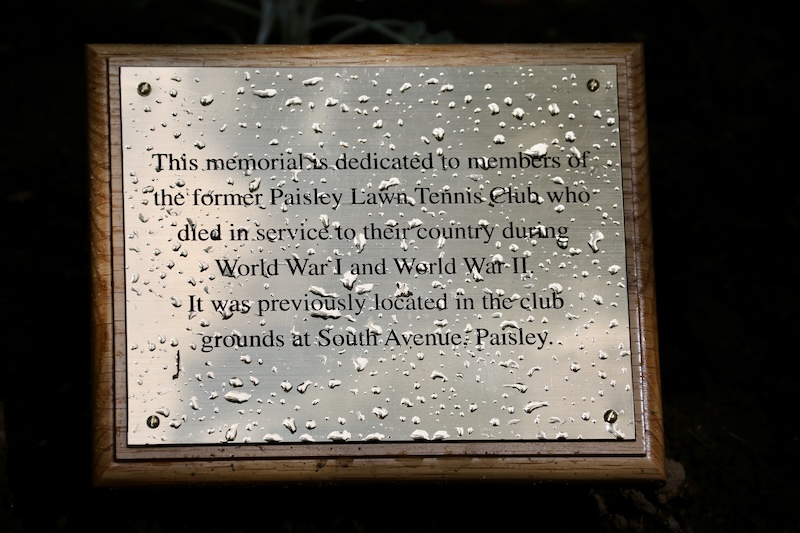
The University of the West of Scotland (UWS) formally unveiled the relocated Paisley Lawn Tennis Club War Memorial at its Paisley campus on Monday 8 June, ensuring the memorial’s long-term preservation and improving public access to this important piece of local history.
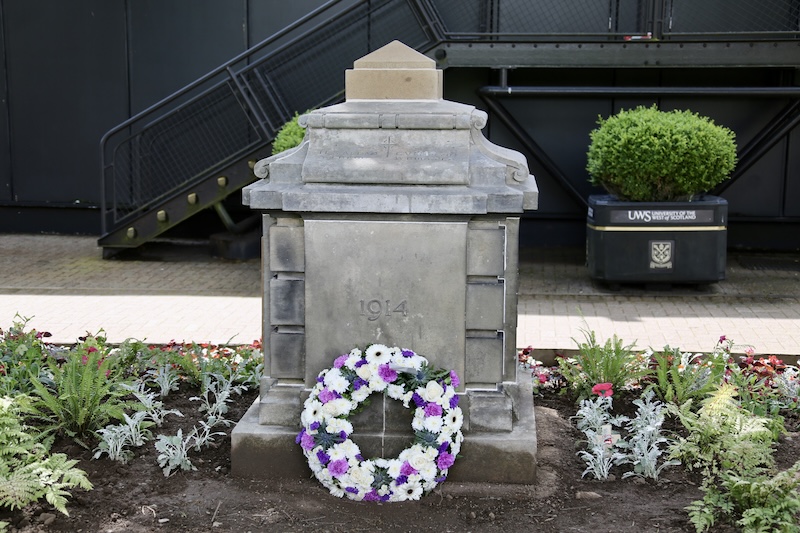
Originally established in the 1880s, Paisley Lawn Tennis Club played a significant role in the town’s sporting and social life. The Club relocated to Thornly Park in 1909, where the war memorial was later erected to honour 15 members who lost their lives while serving during times of war.
The memorial has now been carefully relocated from the former Thornly Park site to UWS’s Paisley campus. The move reflects the University’s commitment to preserving local heritage while making the memorial more accessible to the wider community.
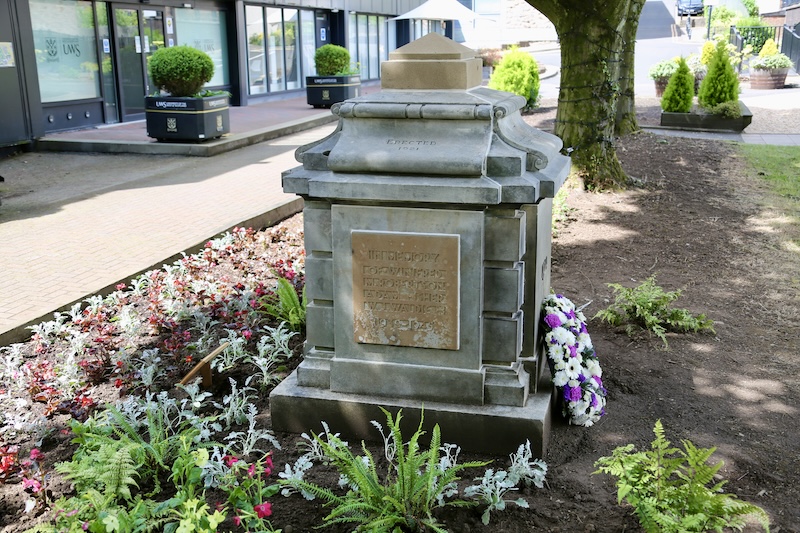
A special unveiling and reconsecration ceremony took place on campus, led by Reverend James Gibson, Interim Moderator and Minister of Paisley Abbey. Guests heard remarks from Professor James Miller, Principal and Vice-Chancellor of UWS, Vice Lord-Lieutenant David MacLellan and Provost Lorraine Cameron.
Representatives from military organisations, led by British Legion Parade Commander Paddy Devlin and accompanied by a piper, participated in a wreath-laying ceremony before the memorial was officially unveiled in its new setting.
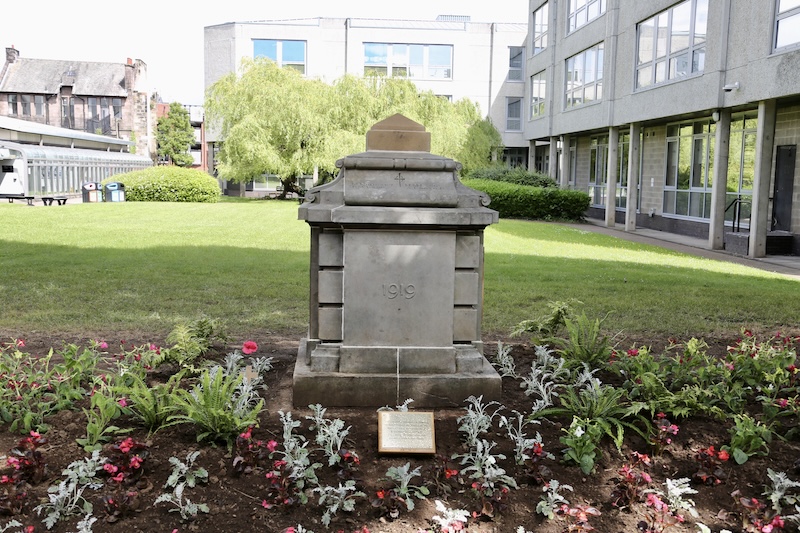
The relocation highlights the historic links between Paisley Lawn Tennis Club and Paisley College, one of the predecessor institutions of UWS. Among those commemorated on the memorial is Matthew Hodgart, who served on the College’s governing body at the outbreak of the First World War.
Following the ceremony, guests attended a reception featuring displays and historical information detailing the origins of the memorial and the history of Paisley Lawn Tennis Club.
Professor James Miller, Principal and Vice-Chancellor of UWS, said:
“The relocation of the Paisley Lawn Tennis Club War Memorial to the heart of our Paisley campus ensures that the memory of those commemorated will remain visible, accessible and cared for, for generations to come.”
The memorial now occupies a prominent location within the University’s Paisley campus, where it will continue to serve as a lasting tribute to the sacrifice of the Club members it commemorates and as a place of remembrance for future generations.

